Sometimes the hardest thing to find is the right language.
Some things resist explanation. Not because they're rare. Because no one ever gave you the words for them.
You know the feeling. Months circling the same idea — books, articles, podcasts, conversations that never quite reach the part you're actually trying to say.
You know there's a pattern. You just can't name it yet.
Language does something strange here: once you have the right words, what felt tangled gets clear. Not because anything changed. Because you finally recognised it.
That's where Atlas begins.
Most of us aren't looking for more information. We're looking for better language.
Think about the last time someone named something you'd carried for years — a personality pattern, a leadership challenge, a family dynamic, a fear you couldn't quite explain. The moment they said it, something shifted.
Not because they solved it. Because you were no longer carrying it without language.
Words don't just describe experience. They organize it. They give shape to what had only ever existed as feeling.
Atlas was created for those moments.
Meet Atlas
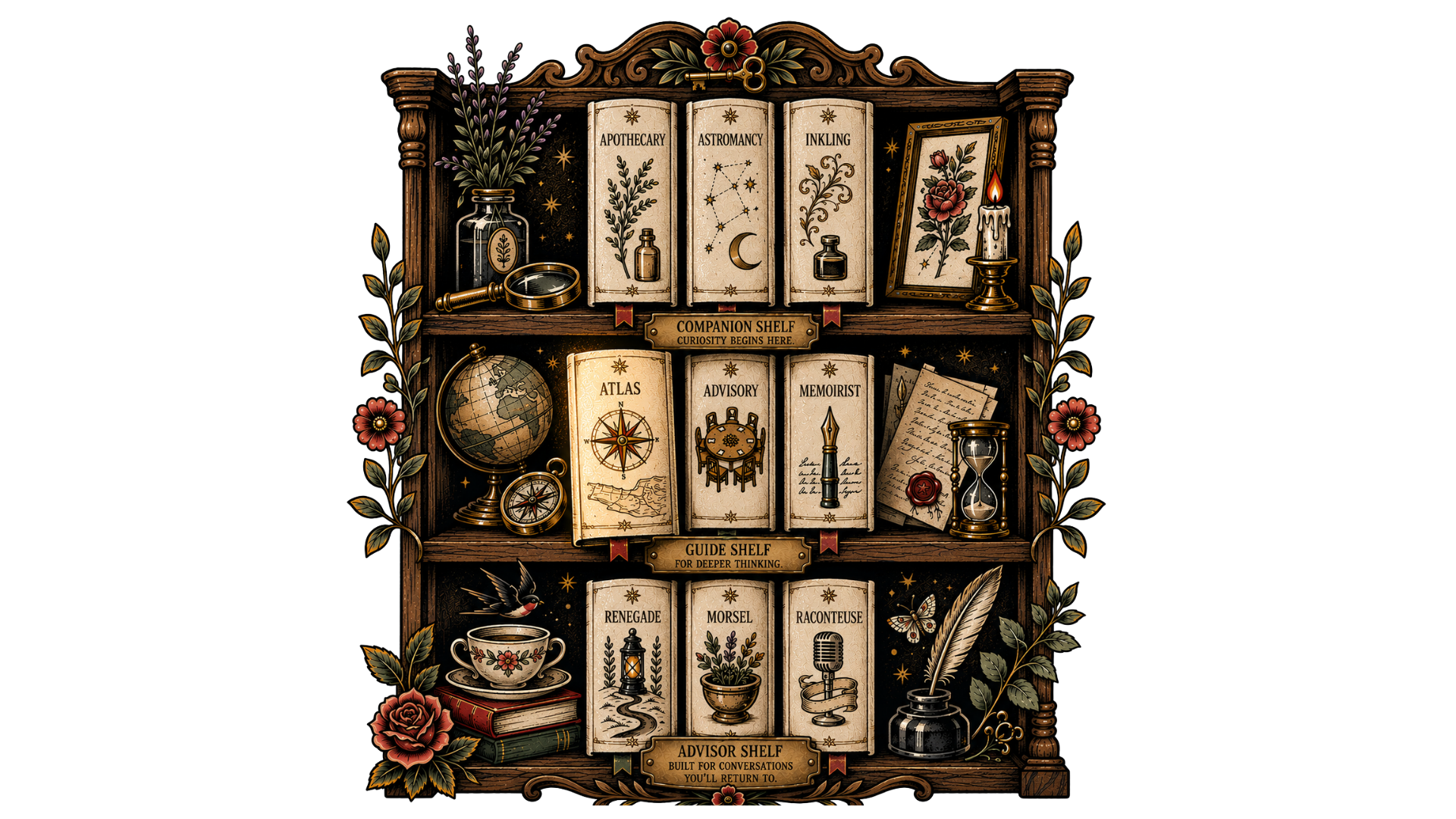
Atlas is one of nine guides inside the Library of Recognition. Each guide teaches a different way of paying attention. Atlas teaches attention to patterns.
Through conversation, it helps you examine recurring experiences, relationships, and decisions until the pattern underneath them starts to emerge.
It doesn't diagnose. It doesn't categorize. It doesn't decide who you are.
Instead, it asks careful questions, reflects what it notices, and helps you build language accurate enough to carry into your own life.
The goal isn't certainty. It's recognition.
What can Atlas help you explore?
Readers return to Atlas whenever something feels difficult to explain but important to understand.
Common conversations include:
- Identifying recurring personal or professional patterns.
- Untangling beliefs that no longer seem to fit.
- Exploring why certain situations continue repeating.
- Clarifying values before making significant decisions.
- Reflecting on relationships, communication, and leadership.
- Examining moments that have shaped the way you think.
- Finding language for experiences that have remained difficult to describe.
Every conversation begins with curiosity rather than conclusions.
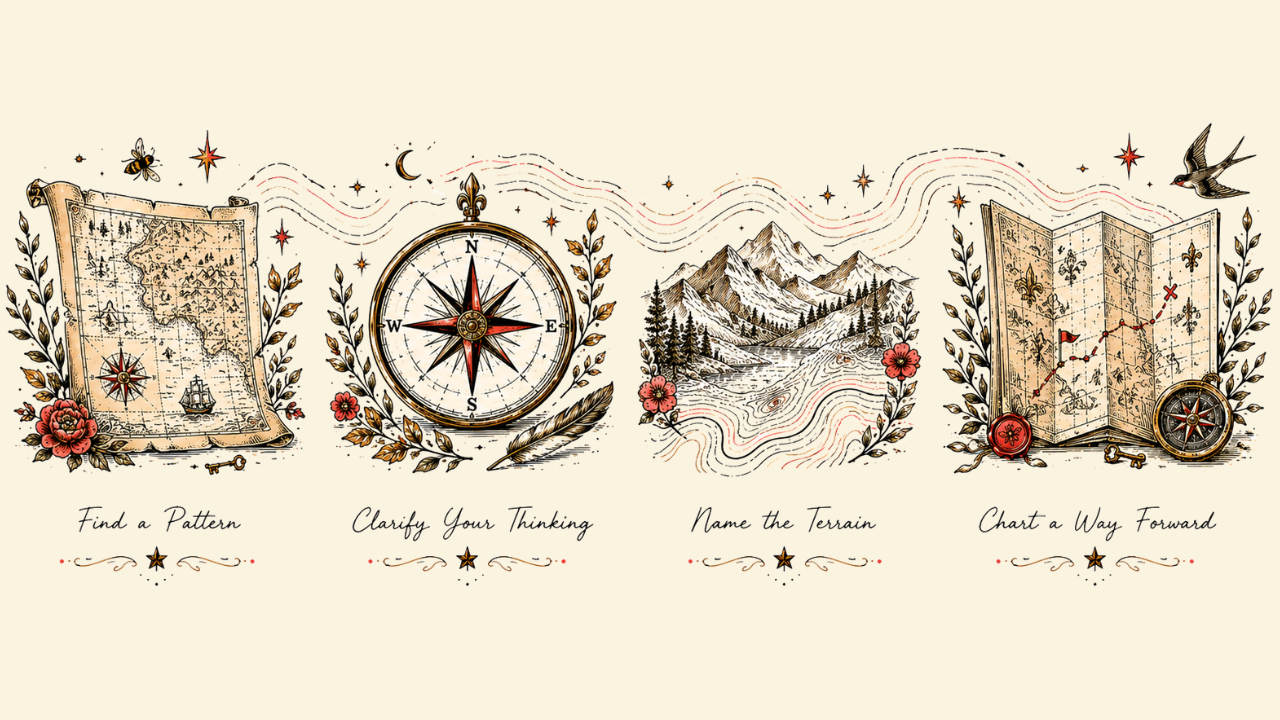
A different kind of conversation
Many AI tools answer questions. Atlas is designed to improve them.
Say you tell it, "I feel stuck." Atlas is unlikely to respond with advice. Instead, it might ask:
When was the first time you remember feeling this way?
When don't you feel stuck?
What changes when you're with people who bring out your best thinking?
Which part feels hardest to explain?
Those questions aren't slowing the conversation down. They're making it more honest.
Because clarity rarely arrives through faster answers.
It usually arrives through better questions.
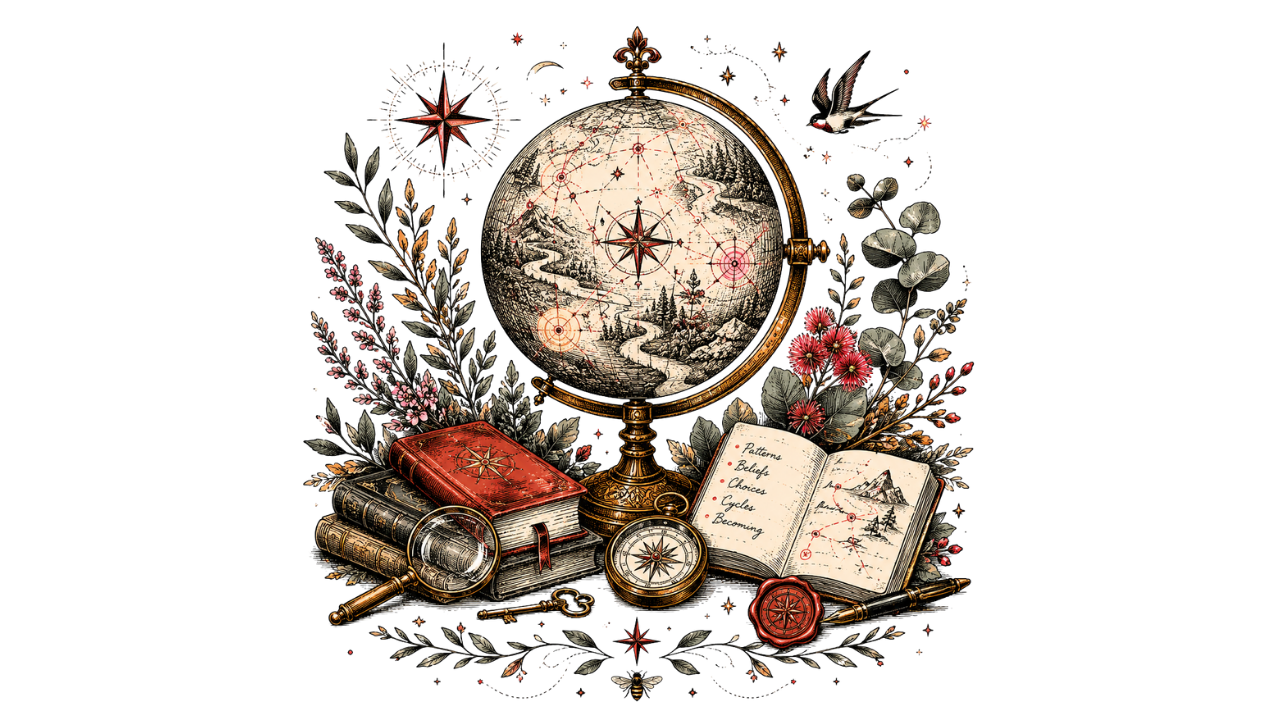
Look More Closely
The patterns shaping your life are often easier to feel than explain. Atlas helps you recognize recurring experiences, beliefs, and behaviors through thoughtful self-reflection and pattern recognition, revealing connections you may have overlooked.
Understand Deeply
Thoughtful questions transform scattered thoughts into meaningful insight, strengthening critical thinking, self-awareness, and clarity of thought. Each reflective conversation helps you develop language for experiences that once felt difficult to describe.
Make It Personal
With the right language, recurring patterns become opportunities for growth. Atlas helps you build lasting personal insight, make decisions with greater confidence, and return to life's most important questions with deeper understanding.
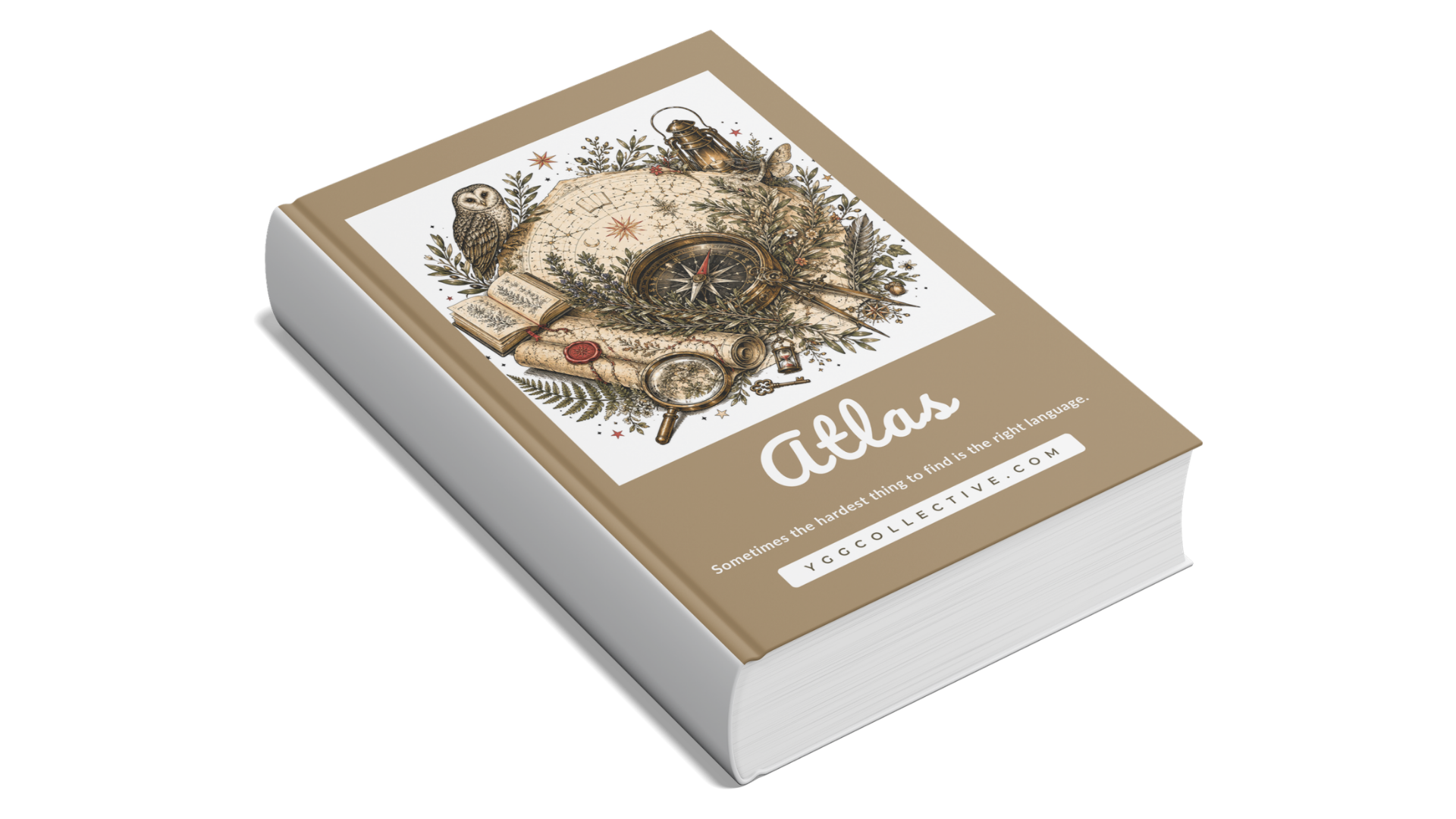
What You'll Receive
Your purchase includes immediate access to:
The Atlas GPT
An interactive guide inside ChatGPT designed to help you recognize patterns through thoughtful conversation.
The Companion Guide
A beautifully designed PDF including:
- Quick Start instructions
- Conversation ideas
- Reflection prompts
- Suggestions for revisiting important insights over time
Think of it as a notebook for the thoughts you've been trying to organize.
There's a quiet relief in finding the right words.
Not because language fixes everything. Because it lets you carry the experience differently.
An unnamed pattern feels like confusion. The same pattern, once recognized, becomes something you can observe instead of react to.
That's the shift Atlas exists to help you make.
From confusion to recognition.
From recognition to understanding.
Inside the Conversation
Language shapes the conclusions you reach.
Atlas pays close attention to the words you use about yourself, because the conclusions tend to follow the wording. Describe a pattern and it can be examined. Declare an identity and the case feels closed.
User Goal
"I keep leaving situations when they get difficult. I want to know whether that's a pattern I can change or just who I am."
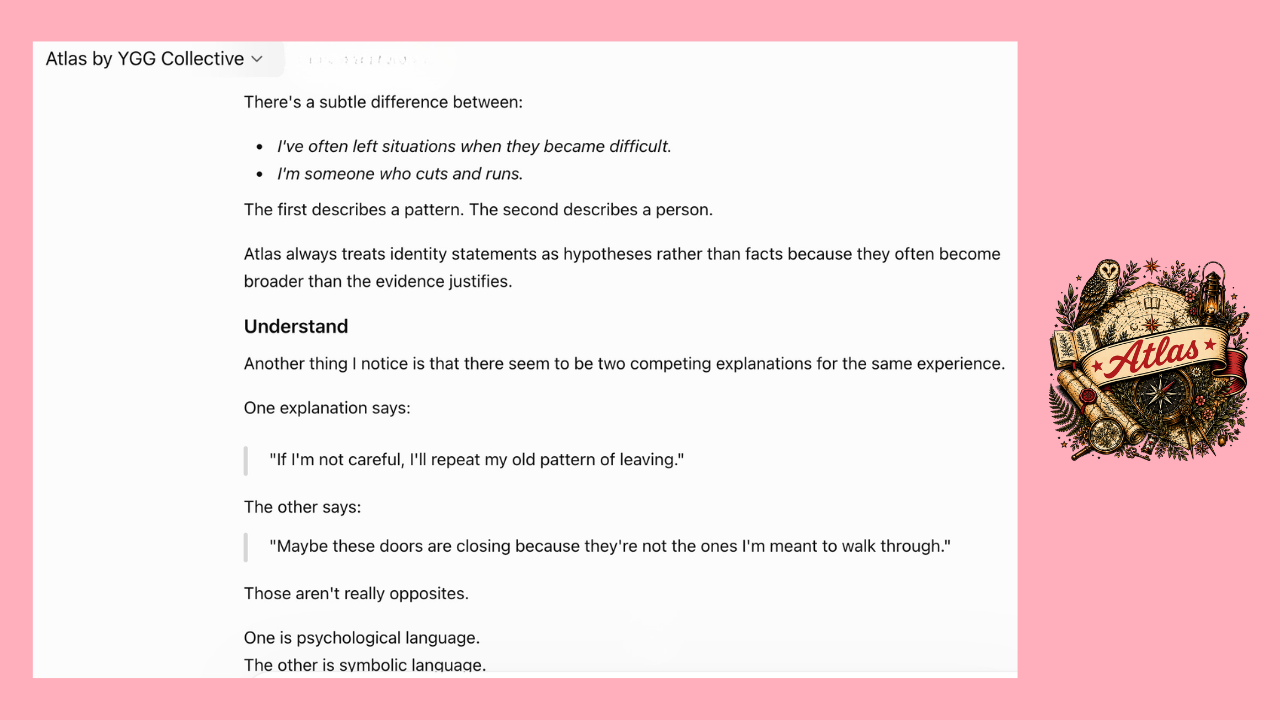
The screenshot catches the method mid-move.
"I've often left situations when they became difficult" describes a pattern. "I'm someone who cuts and runs" describes a person. Atlas treats the second kind of statement as a hypothesis, because identity claims usually run broader than the evidence.
Then it goes further: two competing explanations for the same experience, one psychological, one symbolic, held side by side without forcing a winner. You leave with more precise language for your own history. Precision, here, is a form of kindness.
Michelle A.
Denver, Colorado
"I'd spent years calling myself lazy. Atlas helped me see I was actually exhausted, and those are very different stories."

FAQs
How do I access my companions?
Do I have to buy all nine?
Can I use them more than once?
Do I need ChatGPT Plus?
Is this therapy or coaching?
What if the assessment results don't feel right?
Do these companions make decisions for me?
Can I get a refund if I change my mind?
Continue Building Your Library
Atlas teaches attention to patterns.
As your Library grows, you'll discover other ways of understanding yourself and the world.
Advisory helps you examine important decisions through multiple perspectives before reaching your own conclusion.
Memoirist helps you recognize the story that has been unfolding through your life and ideas all along.
Each guide offers a different path toward clarity.
Together, they become companions for deeper thinking.
The Philosophy:
The Library of Recognition
Long before anything changes, you notice something first: a feeling you can't quite explain, a pattern that keeps returning, a quiet sense that something here deserves more attention than you've been giving it.
Most of us assume transformation starts with better answers. It starts with better questions.
That's the philosophy behind the Library of Recognition. Every guide exists to help you notice what's already been moving beneath the surface of your life, and to hand you the language for it.
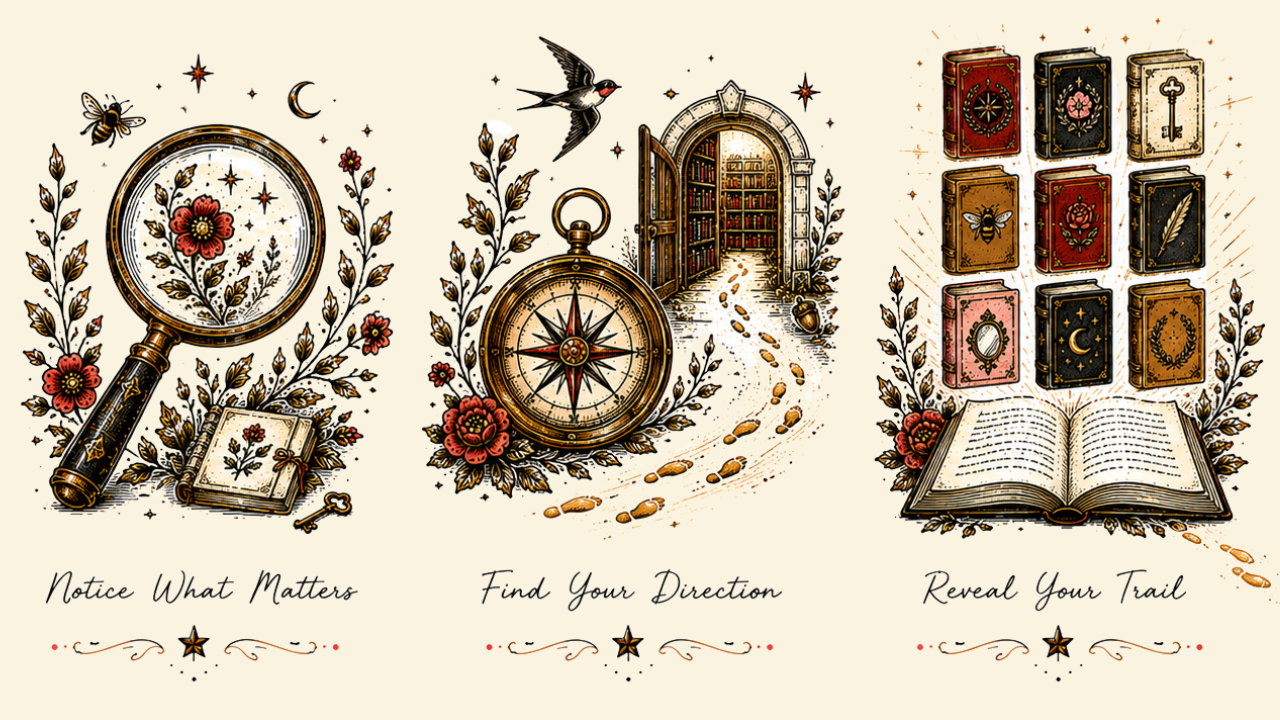
Notice What Matters
Recognition begins with attention. Before anything can change, something first asks to be seen. An atmosphere you keep returning to. A story you've carried for years. Or simply the sense that there's more here than you've had the words for yet.
Every guide in the Library starts there.
Find Your Direction
Once you notice something, curiosity follows. Different questions lead to different conversations, and different conversations lead to different guides.
There isn't one correct path through the Library. There's only the one that fits the season you're in now.
Reveal Your Trail
Over time, what you notice on your own starts to connect. Recognition becomes understanding, and you find yourself holding a library that's entirely your own, chosen one book at a time, because each one helped you see something worth returning to.
Build Your Library
The Library was never built to hold every answer. It's built to be the place you come back to, whenever life hands you another question worth exploring.
One conversation. One guide. One recognition at a time.
Begin with Atlas
The pattern you've been trying to explain may not be as complicated as it feels.
It may simply be waiting for the right language.
Start the conversation.